
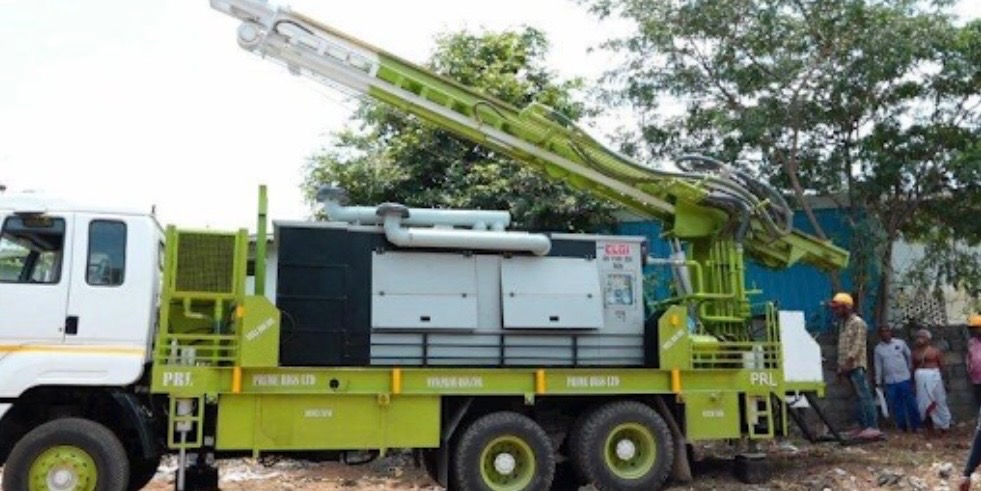

Modern infrastructure development increasingly depends on advanced drilling technologies that ensure precision, efficiency, and adaptability across diverse geological conditions. Borehole drilling systems have evolved significantly, integrating automation, hydraulic control, and enhanced safety mechanisms to meet industrial and construction demands.
In this evolving landscape, types of borehole drilling machinesplay an important role in helping industries understand equipment variations and their operational applications. These systems are designed to support different soil conditions, depths, and project requirements, making them essential for water extraction, construction, and geotechnical operations.
Advanced Borehole Systems For Industrial Drilling Operations
Modern drilling systems are engineered to improve performance, reduce operational time, and enhance accuracy in subsurface exploration and construction projects.
● High-efficiency drilling mechanisms for deep excavation performance
Advanced drilling rigs are designed to penetrate a range of soil and rock formations with greater precision and speed. These systems use hydraulic and rotary mechanisms to maintain a consistent drilling force, reducing manual intervention and increasing operational efficiency. Their ability to maintain stability during deep excavation makes them suitable for large-scale infrastructure projects, water well drilling, and mineral exploration activities.
● Automation integration in modern drilling equipment systems
Automation technology in drilling rigs enhances control accuracy and reduces human error during operations. Automated systems regulate drilling speed, pressure, and alignment, ensuring consistent performance even in challenging geological conditions. This improves safety standards and reduces operational risks. It also allows operators to monitor drilling activity in real time, ensuring better decision-making and more efficient project execution.
● Hydraulic control systems for precision drilling stability
Hydraulic systems play a crucial role in maintaining drilling stability and power distribution. They enable smooth operation across different ground conditions, ensuring controlled force application during excavation. This reduces equipment wear and enhances durability. Hydraulic control also improves responsiveness, allowing operators to adjust drilling parameters quickly based on soil composition and depth requirements.
Efficiency Optimization In Borehole Drilling Systems
Efficiency is a key factor in modern drilling operations, ensuring faster project completion and reduced operational costs across industrial applications. Modern rigs are designed with energy-efficient systems that minimize power consumption while maximizing output, improving sustainability, and reducing mechanical stress for long-term reliability. Precision alignment technologies ensure accurate borehole creation by controlling direction and depth, reducing the risk of deviation, and improving project accuracy. Additionally, enhanced safety mechanisms such as emergency shutdown systems, pressure monitoring, and automated fault detection protect operators and equipment, ensuring compliance with industrial standards and safer performance in high-pressure drilling environments.
Conclusion
Modern borehole drilling systems have become essential for infrastructure, resource extraction, and industrial development due to their efficiency, precision, and adaptability. Their technological advancements continue to redefine operational standards across multiple sectors.
In this context, the drilling rig machine reflects the importance of investing in advanced, reliable, and efficient drilling solutions for long-term operational success. From a professional standpoint, Prime Rigs delivers high-performance drilling equipment designed to meet modern industrial requirements, offering durability, precision engineering, and advanced operational control systems that effectively support large-scale drilling projects.