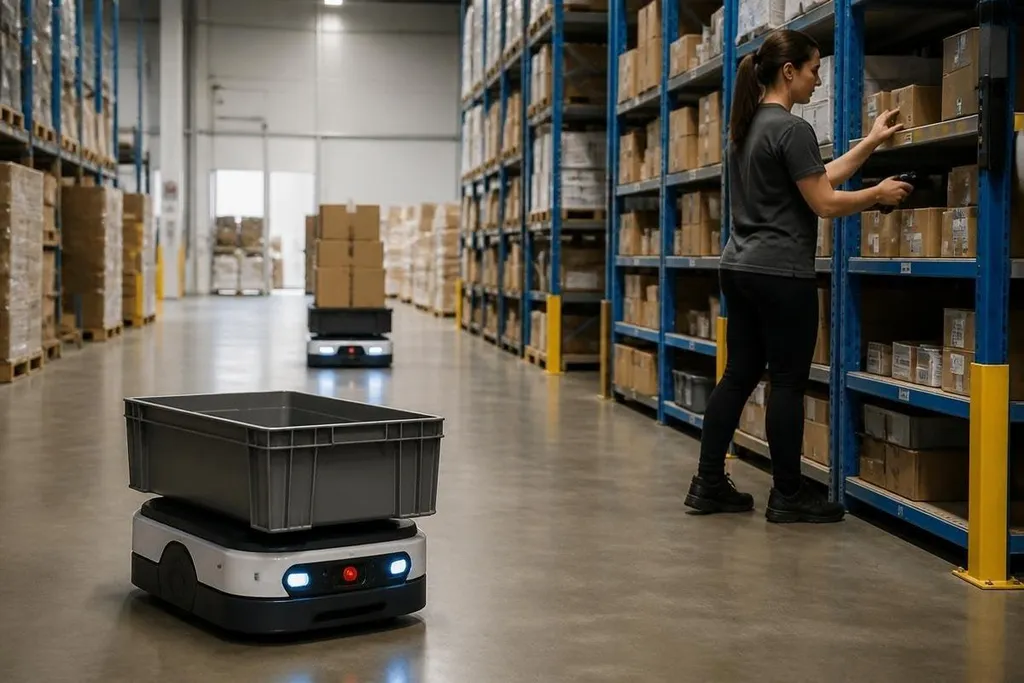
A warehouse robot can carry totes, move pallets, scan shelves, or bring work to a person. The same system can also stop a busy aisle, miss a shelf, or create a safety risk if the site changes around it.
For an operations manager weighing a robot pilot, the useful question is where automation removes repeat work and where it adds new work.
Quick read
- Robots cut walking and lifting on repeat routes.
- Sensors, software, and floor rules decide how well they cope with change.
- A pilot needs measures for output, stoppages, safety, and repair time.
Where robots help
Autonomous mobile robots, or AMRs, carry shelves, bins, or carts across a warehouse. They use cameras, LiDAR, floor markers, or other sensors to locate people and obstacles, then choose a route through the building.
That route matters because a worker may spend a large part of a shift walking between storage and packing areas. The system can cover the same path many times, while the worker stays near the task that needs judgment, such as checking damaged goods or handling an unusual order.
Robotic arms help in a different part of the process. A gripper can pick a known item from a fixed position and place it in a tote, carton, or tray. The task works best when the item shape, location, and handoff stay within the robot's tested range.
Conveyor systems and pallet robots can also reduce manual lifting. The gain comes from a clear task and a stable layout, not from giving a robot every job in the building.
The limits sit in the handoff
Warehouse robots depend on the space around them. A blocked aisle, a loose stretch wrap, a changed rack position, or a tote placed outside its marked area can stop the next step.
That stop may look small on a screen, but it can spread through the work area. If a robot waits at a packing station, the next tote waits too.
If a person has to clear the same blockage several times a shift, the site may move work around instead of removing it. Robot arms face a similar limit at the gripper.
A system trained for boxed goods may struggle with soft bags, clear plastic, reflective surfaces, or items packed in random positions. A camera can see an object without giving the arm a safe grip.
For managers, the right measure is not the number of robots on the floor. Check how often each robot completes its assigned task without a person stepping in.
Safety changes with the system
A robot changes how people move through the warehouse. Workers need clear paths, marked crossings, stop controls, and rules for entering a robot work area. Those rules need practice, because a safety sign cannot tell a person what a robot will do next.
The risk also changes during service. A technician may need to enter the robot's path to remove a jam, inspect a sensor, or replace a part. The site needs a safe way to stop and isolate the system before that work starts.
Software faults matter too. A wrong map, a failed sensor, or a lost network connection can send a robot to the wrong place or leave it waiting. Manual work must remain possible when the system stops.
A wider rollout needs records of stops, recovery time, and staff work during the pilot. Reports at Robot 24 can give an operations manager named machines, task results, and dates to compare before measuring the business case.
What the business must measure
The system may reduce walking while raising support work. That trade needs numbers from the site, collected across normal busy periods and quieter shifts.
Track completed tasks per shift, human interventions, blocked routes, charging time, repair calls, and orders delayed by the system. Record the cause of each stop. “Robot stopped” is a label; “plastic wrap covered the front sensor” tells the team what to fix.
The cost also includes floor changes, network work, training, spare parts, software fees, and staff time during setup. A lower headcount in one area may not cover new work in maintenance or control-room support.
I'd start with the task that has the clearest repeat pattern and the lowest safety risk, then test it beside the current process.
A practical pilot checklist
Before buying or expanding a system, check these points:
- Name the task: Set one job, one start point, one end point, and one success measure.
- Map the exceptions: List damaged goods, blocked aisles, mixed totes, and manual handoffs.
- Set stop rules: Decide who can stop the system and how staff restart work safely.
- Count human help: Record every intervention, its cause, and the minutes lost.
- Price the support: Add training, floor work, network changes, spare parts, and service fees.
- Set the review date: Compare the robot with the old process after a busy operating period.
A warehouse robot earns its place when it completes a repeat task with fewer delays and less strain, while people can still work safely when the system stops. The next purchase should wait until the pilot shows those results in the warehouse you actually run.